
When someone working inside an AI company says the technology could become dangerous, I think it’s worth taking notice. Especially when the claim is that AI could kill us within the next 10 years!
I think most people will react in one of two ways. Either the warning is proof that we are heading for disaster, or it is dismissed as just another dramatic headline.
But from a school perspective, I think leaders should look at this differently and ask the right questions.
On 8 September, researcher Jacob Coxon announced that he had resigned from Anthropic. He argued that the race to build increasingly powerful, potentially self-improving AI was moving faster than the work needed to make it safe. Another Anthropic researcher, Evan Hubinger, publicly supported the seriousness of the concern.
These are warnings about possible future systems, not proof that the AI tools in our classrooms will cause the outcomes they fear. The risks are obviously contested from different sides, and no one can give a principal a reliable date for when, or whether, those scenarios might arrive. But the uncertainty is not a reason to ignore the conversation.
A principal cannot outsource the decision
A school’s AI approach cannot be decided by whoever finds the most impressive app first. Nor can it sit entirely with the IT department. A principal and leadership team need to agree on what AI is for in their school, where it may help learning, and where the boundaries are.
That means being clear about which tools staff and students may use, what information must never be entered into them, how new tools are approved, and who responds when something goes wrong. It also means reviewing those decisions as the tools change. A policy written once and filed away will not do much good.
This is governance, but it should not become a thick document that nobody reads. Teachers need practical guidance they can use on a Tuesday morning.
Teachers still have to teach
Keeping students safe does not mean pretending AI is not part of their lives. Most will use it whether or not a school has an official position. Teachers have a responsibility to help them understand what these systems can and cannot do, and teach them how to use AI responsibly.
Students should learn to question answers, check sources, recognise hallucinated or fabricated information and think very carefully before sharing personal details. They should also discuss when AI assistance supports learning and when it does the thinking for them. This is often the hardest part to get right.
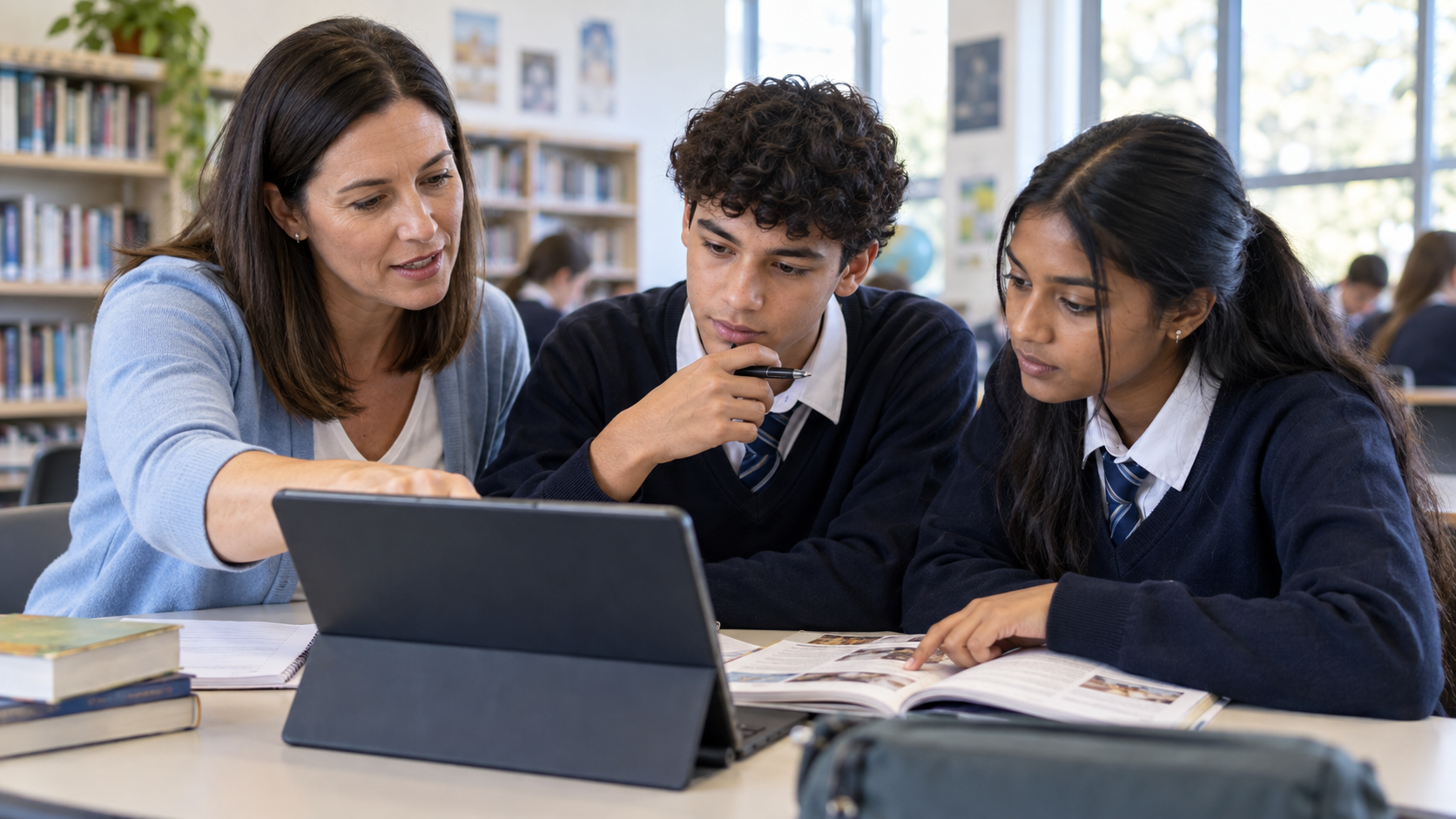
This conversation belongs across subjects, not only in a once-off digital citizenship lesson. It requires teachers to be supported, given time to experiment safely, and allowed to say when they are unsure. We cannot expect good judgement from students if adults are left to work it out alone.
Caution is not the opposite of progress
I don’t think Coxon’s resignation is an instruction for every school to stop using AI. I see it as a reminder that powerful technology like this deserves more than enthusiasm and someone putting R50k in the budget towards it.
Schools do not control the research labs. But they do control what happens in classrooms, what data they share, how they support teachers, and what they teach children about the tools already in their hands.
The question for a principal shouldn’t be, “Should we use AI?” Rather they should ask: “Can we explain why we are using it, what we will protect, and who remains responsible when it gets something wrong?”
That feels like a better place to start than either panic or blind adoption.